
What Are Letterpress Wedding Invitations? A Complete Guide
If you've ever held a wedding invitation and immediately noticed the weight of it — the way the paper felt substantial in your hands, the slight impression the ink left behind — you've experienced letterpress.
It's one of those things that's hard to describe until you feel it. And once you do, it's hard to imagine anything else.
If you're wondering what letterpress actually is, how it's made, and whether it's the right choice for your wedding invitations — you're in the right place.
What are letterpress wedding invitations?
How are letterpress invitations made?
Can you combine letterpress with gold foil?
Are letterpress invitations worth it?
Where to get letterpress wedding invitations?
New to the custom invitation process entirely? Before you dive in here, this post walks you through exactly what to expect — from first conversation to your guests' mailboxes.
What are letterpress wedding invitations?
Despite being an age-old print method, letterpress has seen a resurgence in the luxury wedding world due to its craftsmanship and its tactile beauty. And the result is unlike anything digital printing can replicate. To understand just how beautiful this print method is, let’s start at the beginning.
Letterpress printing dates back to the mid-14th century, when Johannes Gutenberg revolutionized the printing world with his movable type press. This method allowed for mass production of printed materials by pressing inked letters into paper, creating crisp, tactile impressions. It replaced the laborious hand-copying of texts, making books and printed materials more accessible and transforming communication.
For centuries, letterpress remained the standard printing technique, known for its rich, deep impressions and timeless elegance. With the rise of modern printing technologies, letterpress became less common in the 20th century, but it never lost its appeal. Today, it has experienced a renaissance, particularly in luxury and bespoke printing, where its handcrafted, artisan quality is cherished for projects like custom wedding invitations. The meticulous craftsmanship, combined with the unique texture and depth letterpress offers, makes it a sought-after method for those seeking timeless elegance in print.

How are letterpress invitations made?
Today’s letterpress process blends traditional craftsmanship with modern design precision. It begins with custom plates made from a design, often created digitally, that are meticulously positioned in a press. Thick, luxurious paper, such as cotton or handmade stock, is then pressed against the inked plates. This creates a deep impression on the paper, giving letterpress its signature tactile quality. Each color in a design requires a separate plate and pass through the press, which is why letterpress is known for its attention to detail and craftsmanship. The process is slower and more hands-on than digital printing, but the result is a stunning, textured finish that speaks to the elegance and quality of personalized stationery.
The design elements you choose — paper, ink, color — shape everything about how the final suite feels.
What are the limitations of letterpress?
Letterpress printing, though beautiful and timeless, does have several limitations that couples should consider. One of the primary constraints is its inability to handle intricate, highly detailed designs or large areas of solid color, as the press's deep impression is better suited for bold text and simpler motifs. Additionally, letterpress requires a separate plate and press run for each color, making multi-color designs more labor-intensive and costly. The tactile impression also limits the types of materials that can be used; thicker, more textured papers are ideal, while thinner or coated papers may not work as well. Furthermore, achieving full bleed designs or printing on both sides of lightweight paper is challenging, as the pressure from the press can cause the design to show through, though there are always workarounds. There are always thoughtful workarounds — it's the kind of thing we'd talk through together based on your specific design.
What type of ink and paper is best for letterpress?
Letterpress inks are known for their transparency and can be custom-matched to nearly any color, allowing for an incredible level of personalization. If you want your invitations to match the exact shade of your bridesmaids' dresses, for example, letterpress printing makes it possible. Each ink color is carefully mixed by hand, following a precise formula or "recipe" to achieve the perfect hue. The process requires expertise, as the printer tests the color on paper to ensure it aligns with the desired shade. Since letterpress inks are translucent, they interact with the texture and tone of the paper, creating subtle variations in color, which adds to the unique, handmade quality of each piece. Because of the layering effect, light colors may appear softer, and darker hues will have a rich, luxurious finish, giving the invitations depth and dimension that standard printing cannot replicate.
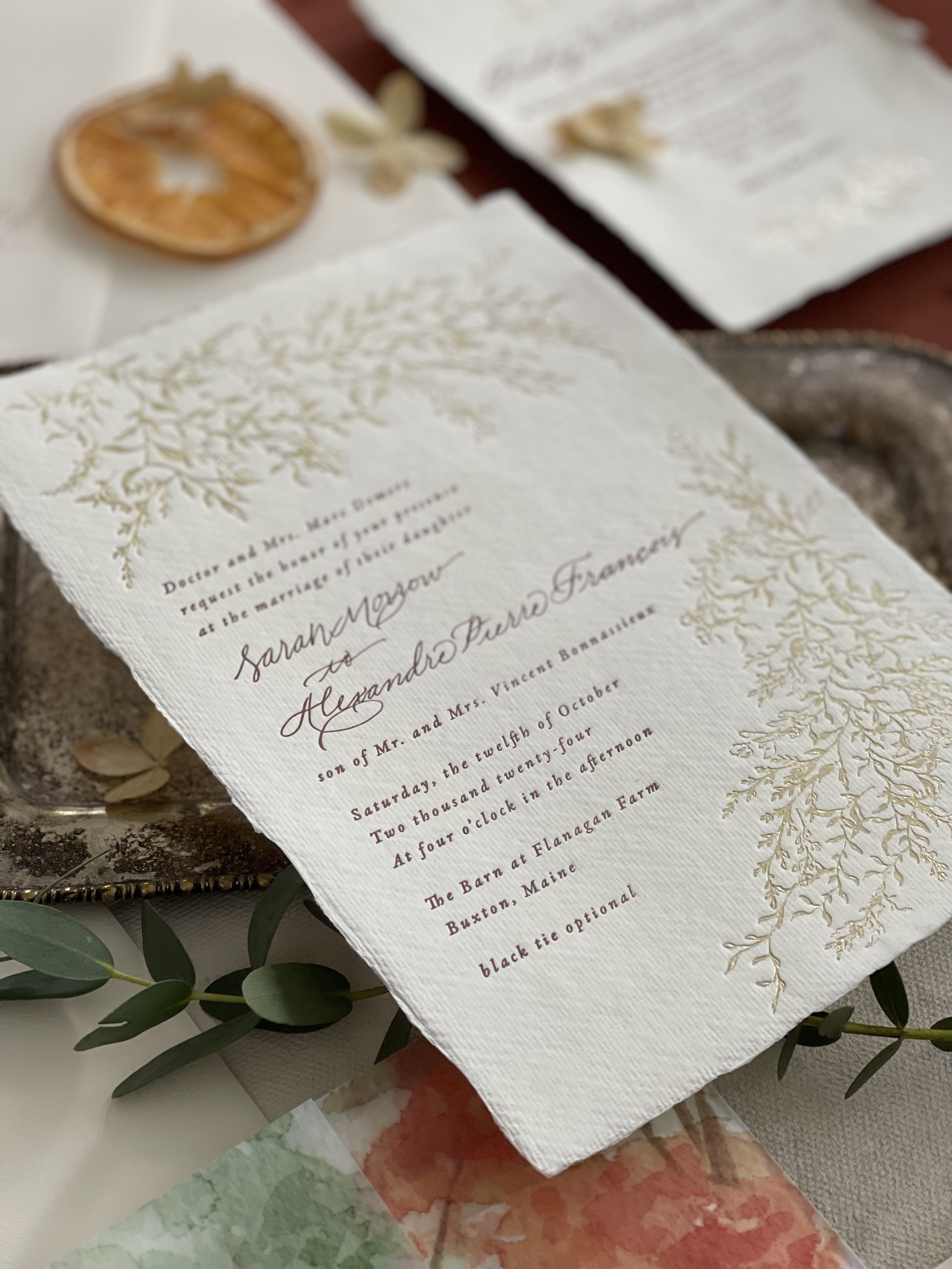
The type of paper you choose for letterpress printing plays a huge role in the final result, with different thicknesses and textures creating distinct impressions. For those seeking a nod to vintage elegance, handmade paper is the ultimate choice. Its rough, deckled edges and natural texture create a stunning contrast with the pillowy impression left by the letterpress, offering a luxurious tactile experience. Cotton cardstock, another popular option, is particularly well-suited to letterpress because of its softness and ability to achieve deep, crisp impressions. Available in both single-thick and double-thick options, cotton paper is ideal for couples wanting an invitation that feels substantial and refined in hand. Double-thick cardstock, in particular, elevates the entire design, giving your invitations that "must-be-touched" quality and signaling an event that will be both elegant and memorable. Even for modern weddings, letterpress printing on sleek, smooth cardstock can create a minimalist yet captivating effect, proving that this traditional method works beautifully with a wide range of wedding styles.
Can you combine letterpress with gold foil?
Letterpress printing pairs beautifully with other printing methods like digital and foil, offering endless creative possibilities for wedding invitations. By combining letterpress with digital printing, you can achieve intricate details or full-color designs that letterpress alone might not be able to replicate, while still retaining the tactile, luxurious feel of the impression. Adding foil stamping into the mix elevates the design even further, bringing a touch of shine and elegance with metallic accents that catch the light and complement the deep, textured letterpress print. This combination allows couples to layer traditional and modern elements, creating a truly bespoke invitation suite that showcases the craftsmanship of letterpress alongside the versatility of digital printing and the elegance of foil. Whether it’s a delicate foil monogram paired with a letterpress body or a digitally printed watercolor border enhanced by letterpress details, these methods blend seamlessly to create invitations that feel both timeless and contemporary.
Are letterpress invitations worth it?
Letterpress comes with a higher investment than digital printing — and that's exactly as it should be.
The custom plates, the premium cotton paper, the additional press runs for each color — every element of the process reflects the craftsmanship behind it. It's slower, more hands-on, and more deliberate than anything a digital press can produce. And you can feel that in the finished piece.
For couples who want their invitations to feel like the rest of their wedding — considered, personal, and worth holding onto — letterpress is rarely something they regret. It's the kind of detail guests notice without being able to name it. The weight of it. The impression. The sense that someone cared.
And in a world where most things are disposable, there's something quietly powerful about sending something your guests will actually keep.
Where to get letterpress wedding invitations?
When you're investing in something this considered, the designer you work with matters as much as the print method itself.
Look for someone who understands letterpress deeply — not just the aesthetic, but the process. Who knows which papers hold an impression best, which ink colors will shift on cotton stock, how to combine letterpress with foil or digital printing when the design calls for it.
And if you want the experience to feel as considered as the invitations themselves — someone who handles the design, the production, the addressing, and the mailing so you don't have to — that's exactly what I do.
If you'd like to learn more about how the process works, this post walks you through every step — from our first conversation to the moment your invitations arrive at your guests' doors. Or if you're ready to begin, I'd love to hear about your wedding.